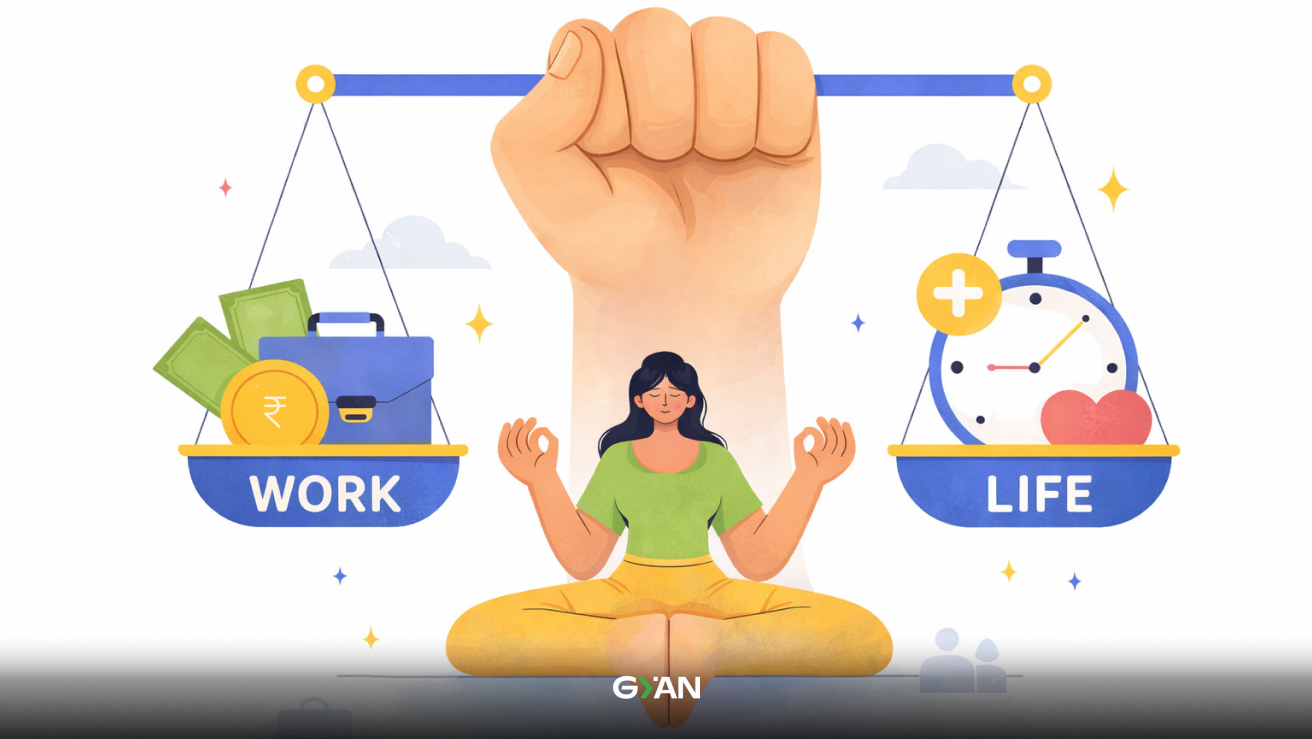
Are you experiencing tired mornings, constant pressure to keep up, and a feeling that there’s no time for yourself? Struggling with work-life balance stress can slowly drain your energy, making even simple tasks feel overwhelming. Managing this pressure might leave you feeling exhausted instead of actually treating it.
Putting simple and effective stress management techniques into practice requires consistent effort. But you’re not alone. In today’s busy world, where people are chasing big dreams and career goals, finding a balance between work and personal life has become a necessity rather than a last resort.
What Researchers Are Saying
Research shows that long working hours, constant digital connectivity, and rising job pressures are reducing sleep duration and increasing burnout among working professionals.
Sleep Deprivation
According to the How India Sleeps survey (2025), reported by The New Indian Express, 59% of Indians get less than six hours of sleep each night. This shows how widespread sleep deprivation has become across the nation.
Rising sleep deprivation stress, fuelled by increasing work stress in India, is one of the main causes of sleepless nights among working professionals. Because of this, people often feel tired even before they start their day.
Insufficient sleep directly lowers productivity, disrupts mood, and creates tension in family life by leaving individuals mentally drained and emotionally irritable.
Overworking
A 2025 Times of India report highlights that nearly 60% of working professionals show clear signs of burnout. India’s growing burnout epidemic is marked by late-night emails, weekend work calls, and an “always-on” culture that makes switching off almost impossible.
With long working hours and constant digital connectivity, work stress in India is rising, leaving very little room for rest or personal life.
Types of Stress
Negative Stress
Negative stress builds up when pressure is always present. Long work hours, constant deadlines, financial worries, or emotional events such as loss or relationship conflicts slowly drain your energy.
When rest is repeatedly delayed, this stress starts affecting sleep, focus, and emotional balance. In the end, you are left with no energy and little to show for the pressure you have endured.
Good Stress
Good stress is short-term and motivating. It may appear before an exam or during an important presentation. Your body feels alert, focused, and driven instead of overwhelmed.
This kind of stress pushes you to prepare better, perform more sharply, and grow without harming your well-being.
Stress Symptoms
- Mood swings: Extreme or sudden changes in how you feel, often caused by changing levels of brain chemicals.
- Insomnia: Difficulty falling asleep or staying asleep, often caused by stress or poor sleeping habits.
- Fatigue: A feeling of tiredness and lack of energy, even after getting enough sleep.
- Weight changes: Weight gain or loss influenced by cortisol, a stress hormone that can affect appetite.
- Digestion problems: Chronic stress can affect gut bacteria and reduce blood flow to the stomach, causing discomfort and digestive disorders.
- Headaches: Tension-type headaches can feel like dull, constant pressure or a tight band around the forehead, temples, neck, and shoulders.
- Anxiety: Excessive worry, fear, and tension that can interfere with daily life.
- Depression: A serious mood disorder that can cause sadness, loss of interest, and low energy lasting for weeks or months.
- Body tension: Chronic stress can prevent muscles from relaxing, resulting in neck and shoulder pain, decreased mobility, and discomfort.
- Obsessive thoughts: Intrusive, unwanted, and persistent thoughts that cause significant anxiety.
Finding the Root Cause of Stress
How do you know whether you’re experiencing stress? Stress can be identified by noting the triggers that cause it. Stress often appears as work pressure, but the real trigger may be deeper.
What feels like stress at work may actually come from long travel times, unclear expectations, or a draining workday. What feels like health-related stress may be rooted in poor sleep, inactivity, or irregular eating habits caused by overwork.
To find the real cause, pause instead of avoiding it. Sit with the discomfort, reflect honestly, and analyse what is truly creating the pressure. Writing it down can bring clarity to the specific cause. Once the root cause is clear, solutions become more practical and manageable.
Practical Stress Management Techniques
- Sleep: Set a fixed sleep and wake time, even on weekends. Avoid screen time before bed and create a simple wind-down routine so your mind knows it is time to rest.
- Exercise: Move your body daily by walking, stretching, lifting weights, or doing yoga. Even 20 to 30 minutes can help release stress and keep you active for the rest of the day.
- Family time: Set aside distraction-free time with your family, even if it is brief. Being present with people you love helps you recharge emotionally and relieve stress.
- Time management: Plan your day the night before. List your top three tasks, block time for them, and leave space between tasks to avoid feeling pressured.
- Self-talk: Pay attention to your inner dialogue. When negative thoughts appear, pause and replace them with positive statements such as, “I can do this.”
Daily Habits to Manage Work and Life
Taking intentional steps to achieve work-life balance can help you lead a calmer and healthier life.
- Set a clear work end time: Decide on a realistic cut-off time for ending work, even if it needs to remain flexible. This can prevent you from overworking beyond office hours.
- Use commute time wisely: Use your journey home to listen to a podcast, play gentle music, or simply sit quietly. This gives your mind time to settle.
- Turn off work-related apps: Silence work notifications after your cut-off time to prevent constant pings from pulling you back into work mode.
- Create non-negotiable personal time: Set aside time for self-care, even on hectic days. Giving yourself this time helps you relax and recharge.
- Follow a simple night routine: Dim the lights, eat early, and avoid heavy discussions before bed. These cues help prepare your body for sleep.
- Be gentle with yourself: Some days can be draining. On those days, focus on the basics, allow yourself to rest, and avoid unnecessary self-criticism.
Stress is Universal
Stress is universal. You do not have to feel worried or believe that you are the only person battling it. Stress has become common among everyone, from school students to working professionals. Most people are trying to find ways to manage stress in their lives.
Allow yourself to accept that stress is a natural human response to situations that challenge our physical, biological, and psychological systems. It triggers the body’s fight-or-flight response by releasing hormones such as cortisol and adrenaline to manage pressure, making it an unavoidable part of human life.
Relaxation Method While Sleeping
Activating your body’s natural relaxation response can be simple and effective. Slow, deep breathing helps calm the nervous system and signals to the body that it is safe to rest. Even taking ten slow, deep breaths can noticeably reduce tension and create a sense of calm.
The 4-7-8 Breathing Method
- Inhale through your nose for four seconds.
- Hold your breath for seven seconds.
- Exhale slowly through your lips for eight seconds, as if gently blowing out a candle.
This breathing technique can support mental well-being and is commonly used as a relaxation technique for stress. Practise it before bed or whenever anxiety rises at night and your mind struggles to slow down.
Conclusion
Balancing work and life through stress management involves identifying stressors, adopting relaxation techniques, and making small lifestyle changes. Start small, remain consistent, and use positive affirmations to keep yourself motivated. By integrating these practices into your daily routine, you can work towards a more balanced and less stressful life.
Even when some days feel heavy, that is okay. Take one step at a time. What matters most is learning how to pause, reset, and respond better instead of pushing through exhaustion. With time, these habits can help you handle pressure with more energy and clarity.
