Are you someone who has always stayed away from exercising or from doing physical activity of any form, because you simply don’t have the interest? Or are you someone who always wanted to start exercising, but your work and busy schedules aren’t allowing you? If you’ve been wondering how to start exercising realistically, this beginner’s guide is for you.
Exercising when incorporated into our daily routine can offer multiple benefits. If you are new to exercising and want to know how to start, this beginner workout guide will help you take the first step with confidence.
Why Exercise is Essential for Beginners
In today’s world, where almost all professional work has become sedentary, physical movement has become very minimal. We choose comfort over health benefits by taking private transportation to work. During free time, our immediate response is to relax rather than engage in any work that requires physical movement. By opting for convenience in every given chance, we are indirectly causing long-term health concerns to ourselves.
Exercising offers multiple physical benefits that keep us healthy and strong for longer. It keeps us active and refreshed, regulates normal body metabolism and maintains weight. Exercising every day provides mental health benefits and keeps our minds calm and active. Consistent physical activity supports long-term lifestyle improvements.
For beginners, it may seem hard at the start because the body is not used to the activity. But through a structured exercise routine, bodies gradually adapt and become flexible, helping you see significant changes in the long run.
Types of exercise for beginners
There are various types of exercises, ranging from mild to intense, for people from beginners to bodybuilders and trainers.
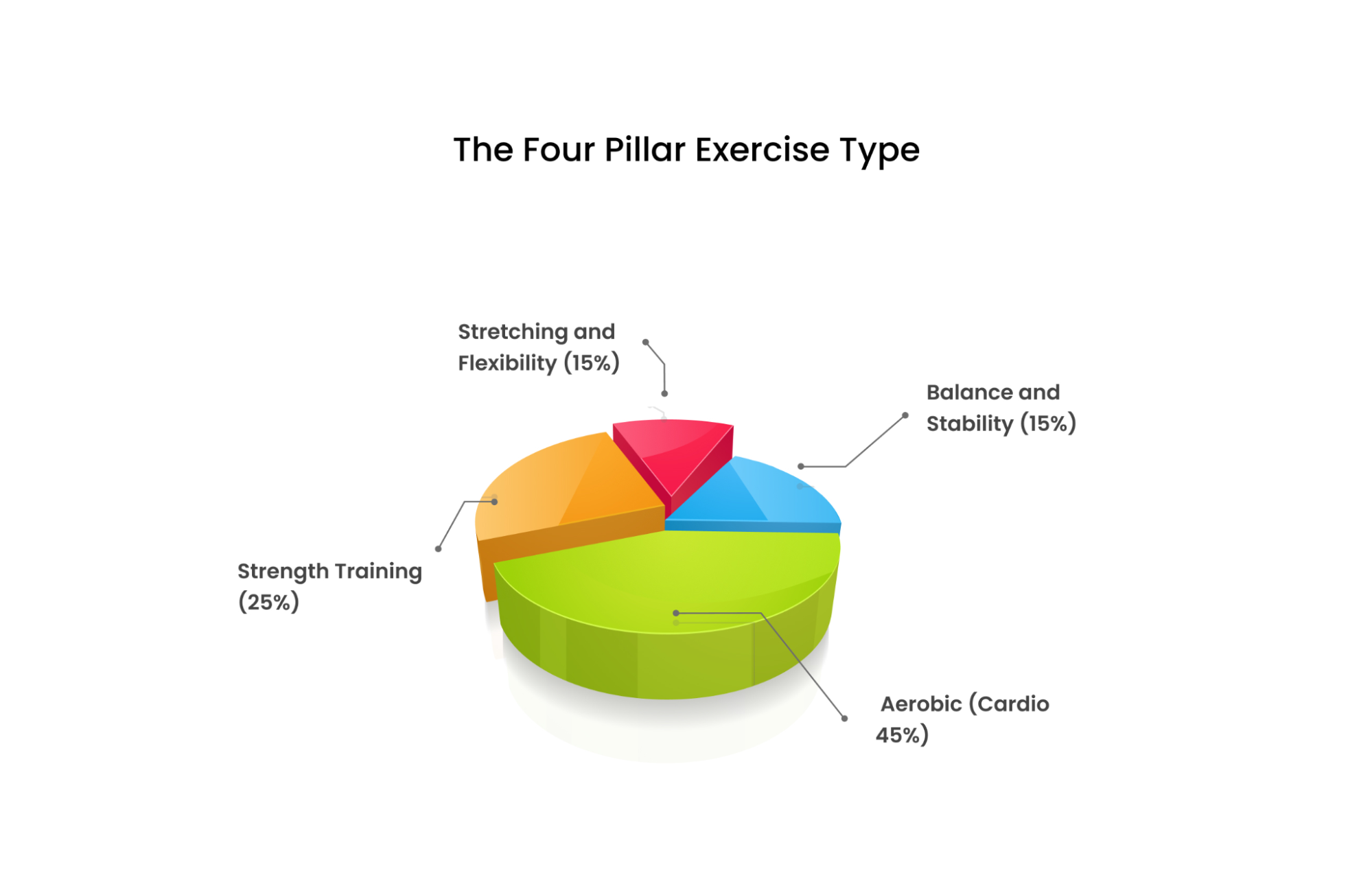
Aerobic
Benefits: Heart and lung health, endurance
Examples: Swimming, cycling, rowing, walking, running, jogging, soccer
Goal: 150 min/week moderate intensity.
Strength Training
Benefits: Muscle strength, bone density, boost metabolism
Examples: Body weight, resistance bands, free weights, squats, pushups, lunges
Goal: 2-3 sessions/week, all major muscle groups
Balance and Stability
Benefits: Fall prevention, coordination, joint stability, core strength, neuromuscular control
Examples: Single-leg stands, heel-to-toe walk, balance board, pilates, yoga
Goal: 2-3 times/week, can be combined with other workouts
Stretching and Flexibility
Benefits: Mobility, muscle recovery, reduced stiffness
Examples: Hamstring stretch, hip flexor stretch, spinal twists
Goal: Daily or after every workout.
How to Start Exercising the Right Way
Check your health first: Checking your current health is important before you start any form of physical activity. This will allow you to identify any condition your body may be undergoing that might worsen when exercised without proper awareness.
Set realistic fitness goals: Set simple and small fitness goals that are achievable and easy to follow every day without tiring you out.
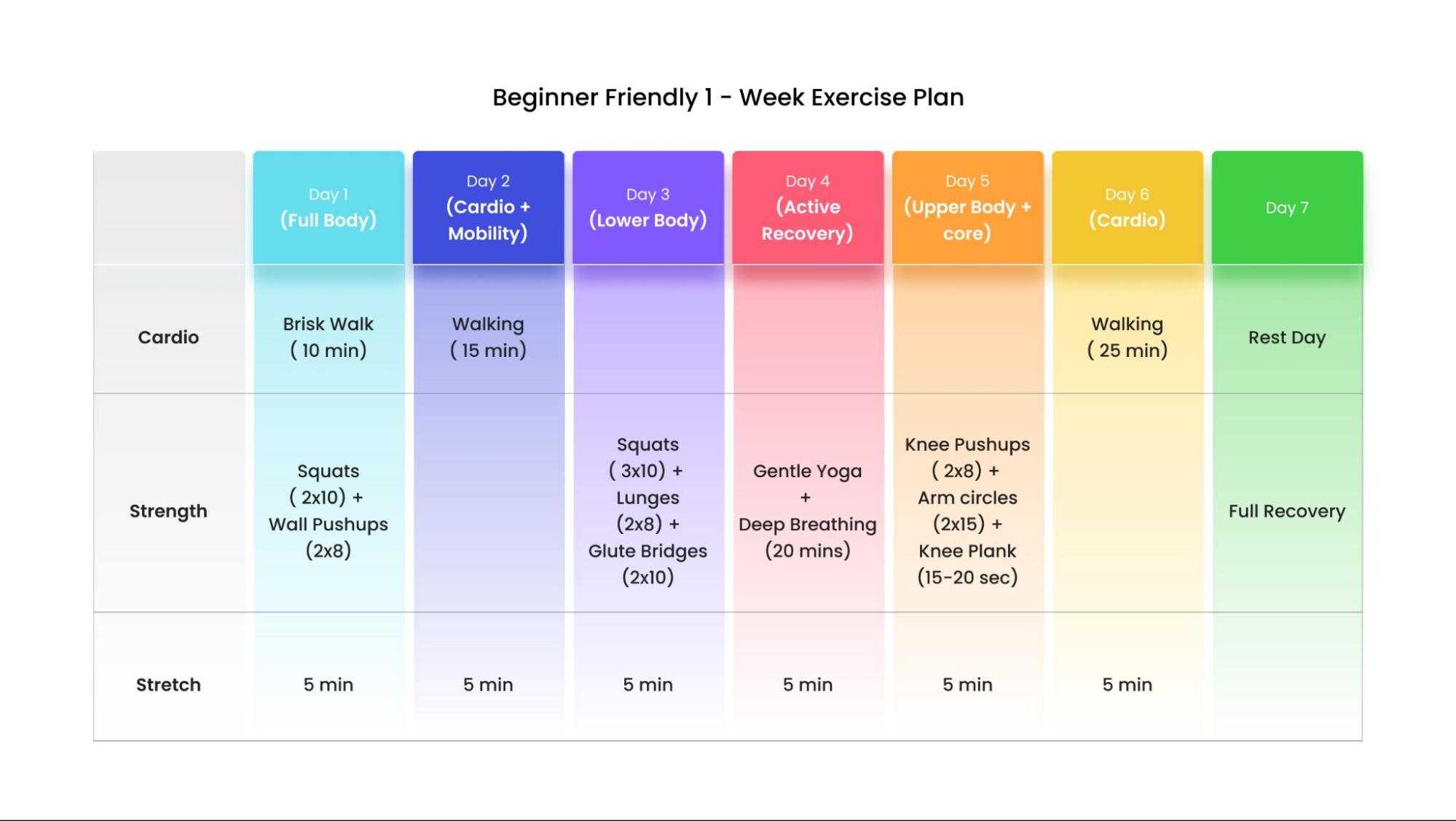
Create a simple workout plan: Plan for the week on what exercise you want to do for how long. It can be as simple as brisk walking 30 minutes a day to start with.
Build consistency and habit: Follow your plan every day by setting apart a particular time of the day and by setting an alarm to remind you until it becomes a healthy habit in your day-to-day life.
Nutrition & Hydration: Exercising alone won’t make you feel fit. Exercise, when paired with a nutritious, balanced diet, helps you notice positive results in your body over time.
Listening to your body: Starting to work out may seem overwhelming at the start, especially when you haven’t done any physical activity before. Observe your body as you start exercising, and gradually adjust your workout routine to fit your body type and energy levels.
How to Stay Motivated as a Beginner
What once started with enthusiasm may now feel like a duty. It is human to slowly lose interest in something that you want to improve in, mainly due to distractions and other interference. To stay motivated as a beginner, having simple action items that seamlessly blend into your daily routine is important.
Mini Goals:
Small, manageable short-term goals that can be achieved within a few days or weeks.
Eg, Master a 1-minute plank: Start by working up from 20-30 seconds, adding 5-10 seconds each week.
Tracking Progress:
Recording each exercise session in your journal or through a fitness app. This log keeps track of all the activities, helping you evaluate improvement over time.
Eg, Mark your calendar every day after work out, even if it’s a 10-minute walk.
Accountability:
Having an accountability partner or coach creates an external obligation that ensures you stick to your schedule even when motivations fade.
Eg, Tell a friend you’ll send a photo after you work out every day.
Rewards:
Celebrating your efforts by rewarding yourself can boost motivation. This process turns exercise from a daunting task into a rewarding habit. This system releases dopamine from your brain, giving a good feeling about your effort.
Eg, Treat yourself with your favourite healthy snack after completing one full week of workouts.
Common Beginner Challenges and How to Overcome Them
| Challenges | Ways to Overcome |
|---|---|
| Lack of Time | Try dedicating early mornings right after waking up to work out. Morning exercise boosts energy and helps you stay motivated throughout the day. |
| Low Energy | Choose a time when your energy is naturally higher, such as the morning, to build a consistent workout routine. |
| Boredom | Use boredom as a cue to move your body. Physical activity helps break laziness, keeps you productive, and refreshes your mind. |
| Fitness Plateaus | Change your workout patterns or adjust your diet to challenge your body differently and keep progressing. |
Conclusion:
Starting to exercise does not require extreme effort right away; it can begin with the smallest of steps. By choosing active physical movement, you are contributing to a healthier lifestyle and building a routine that supports your overall well-being. These small, consistent actions allow healthy habits to form naturally over time.
Start where you are and be patient with yourself. Progress comes from showing up again and again. It’s completely okay if you miss a day, what matters is that you start the next day without guilt or pressure. Over time, consistency will help you create a sustainable and active lifestyle that lasts.
