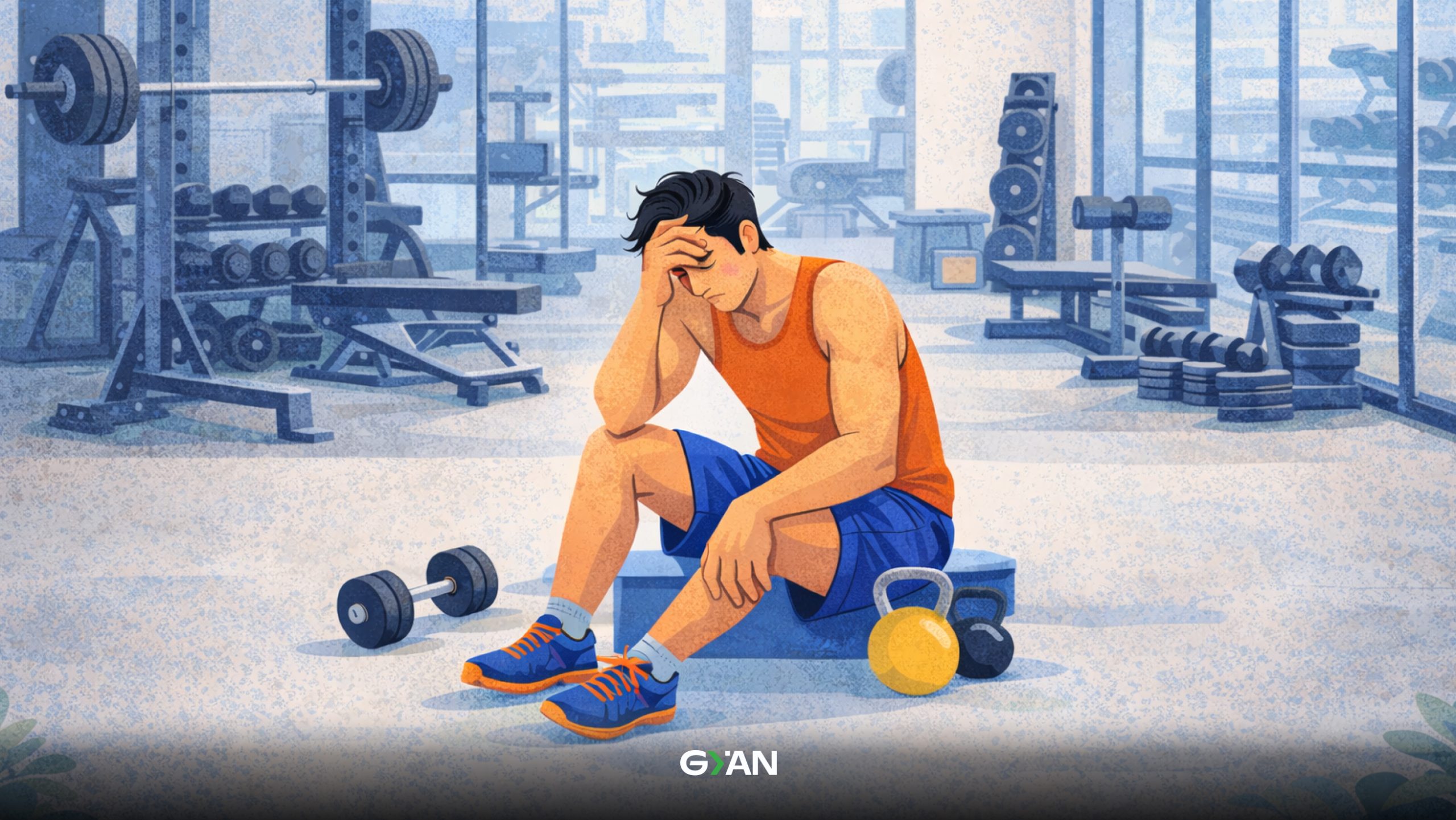
No pain, no gain. Grind harder. Just push yourself. All this sounds very motivating. But the human body isn’t a machine that runs nonstop. Our bodies require exercise. But it also needs rest, good food and sleep. This is as important as exercise because the recovery time is when the body repairs itself and grows. Some people don’t give recovery the importance it needs.
In this blog, we explore how overtraining affects the body and mind and how to recover from it.
Signs of Overtraining
Overtraining means exercising at an excessive volume or intensity without adequate rest. It leads to long-term decline in physical performance and mental fatigue. Let’s look at some of the common signs that show you are overtraining.
- Persistent fatigue that sleep does not fix
- Declining performance despite increased effort
- High resting heart rate
- Sleep disturbances
- Frequent illnesses
- Chronic muscle soreness
- Irritability or mood instability
Our bodies always communicate. It is important to listen to it. People often believe that training harder automatically leads to better results. But without understanding the stress-recovery-adaptation cycle, it produces the opposite effect.
The early symptoms of overtraining are very subtle. But ignoring these will lead to greater damage. Training creates stress. Recovery enables adaptation. Without recovery, you accumulate stress.
Common Causes of Overtraining
The most common cause is training without rest days. You are not giving your body time to recover. When you skip rest days, you interrupt the stress-recovery-adaptation cycle. Muscles break down faster than they rebuild, and hormonal stress compounds daily.
Excessive exercise can lead to hormonal and nervous system problems. It also affects your immune system. Overtraining is not about one hard session. It is about repeated and excessive exercise without recovery.
How Overtraining Affects Your Mind and Body
Overtraining doesn’t just affect your muscles. It disrupts most systems in the body.
Depression and Anxiety
People who overtrain go through persistent fatigue and emotional instability. It results in poor concentration and a lack of interest in other activities. Due to hormonal disruptions caused by overtraining, neurotransmitters are affected, which in turn affects your mood. While exercise supports mental health, excess training spoils it.
Burnout
When you are physically exhausted and mentally depleted, it leads to burnout. It can make you feel unmotivated and turn against workouts. Fitness should be energizing, not exhausting.
Hormonal Imbalance
When we are stressed, the adrenal glands produce a stress hormone called cortisol as a fight-or-flight response. Overtraining disrupts cortisol regulation, causing cortisol spikes. Long-term stress may disrupt adrenal function.
Women may experience menstrual irregularities, testosterone levels may drop in men and metabolism may slow. Some individuals may gain weight despite exercising.
Chronic Fatigue
Chronic fatigue does not simply mean feeling tired. It shows up as tiredness even after eight hours of sleep. Throughout the day, you feel low on energy, with no capacity for exercise and cognitive functions. Even the smallest of tasks feels draining to you.
Mood Swings
During mood swings, even a minor inconvenience can feel irritating. People who overtrain become anxious when they miss workouts and feel guilty when they take time off. They become more emotionally reactive.
Sleep Disruption
Despite being tired from workouts, you may struggle to get quality sleep. It will be hard to fall asleep and you may keep waking up frequently. It causes non-restorative sleep, leaving you feeling unrefreshed or fatigued despite a seemingly normal sleep duration. High levels of stress hormones interfere with the natural circadian rhythms.
How to Avoid Overtraining and Burnout
Overtraining can make your mind and body more dependent on exercise. As workouts release endorphins, you crave this reward. If you miss a session, you become anxious. Your identity becomes about calories and weight.
Importance of Rest Days
Rest is not something that’s optional. It's the body’s necessity. It doesn't measure your self-worth. During the rest time, the muscles repair and hormones stabilize. Results are built during rest, not during workouts. So schedule your rest days just like your training days.
Balanced Workout Routine
For best results, you only need three to five training sessions per week. Structure your workouts with intensity variations, planned progressions and one to two days of recovery between intense workouts. Remember, more is not better.
Fitness Habits
Build protective habits:
- Seven to nine hours of sleep
- Adequate protein and caloric intake
- Proper hydration
- Active recovery sessions (walking, mobility, yoga)
- Monitoring resting heart rate
- Managing life stress outside the gym
Recovery must become part of training, not secondary to training.
Conclusion
Fitness is meant to enhance your life, not to degrade it. It should strengthen your body, not destabilize it. It should support mental health, not create anxiety. Balance is not weakness. It is a necessity. You have one body. Train it. Challenge it. Strengthen it. But above all, respect its need to recover.
