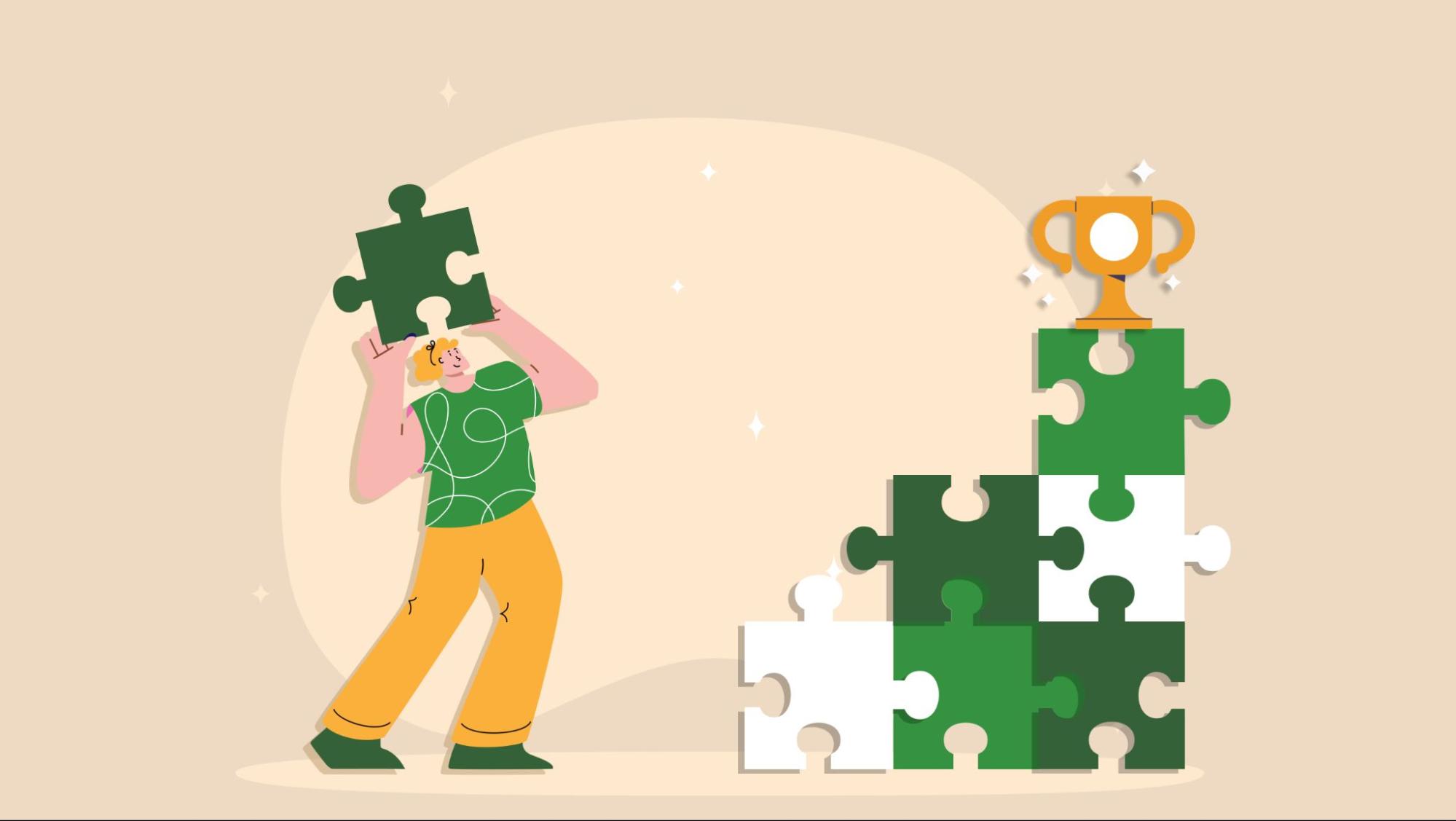
The skills that built your career so far may not be the ones that carry it forward. AI is changing how work gets done, automation is absorbing routine tasks, and new tools are reshaping existing roles even as entirely new ones emerge.
The World Economic Forum's Future of Jobs Report 2025 finds that employers expect 39% of workers' existing skill sets to be transformed or made outdated between 2025 and 2030, and that 59 out of every 100 workers will need training by then.
None of this means you need to predict exactly what the workplace will look like in 2030. It means building future-ready skills – the kind that help you learn, adapt, solve unfamiliar problems, and keep contributing as your role shifts underneath you. This article covers what those skills are, why they're becoming more urgent, and how to build a practical plan around them.
What Are Future-Ready Skills?
Future-ready skills are the capabilities that keep professionals effective as technology, roles, and workplace expectations change – a mix of technical abilities like AI and digital literacy, and transferable ones like analytical thinking, creativity, communication, and adaptability.
The point isn't to collect as many skills as possible. It's to build a combination that lets you work with new technology, think independently, solve problems you haven't seen before, and keep learning as things shift. Technical skills are rising fast in employer priority, but human capabilities such as analytical thinking, resilience, creativity and leadership remain just as central to how employers describe the workforce they'll need through 2030.
Why Will Future-Ready Skills Matter More Before 2030?
Work is changing for several reasons at once. AI and automation are reshaping tasks inside existing jobs. Digital tools are creating new ways of working. Economic and demographic shifts are changing what organisations need from their people. The World Economic Forum names technological change, economic uncertainty, demographic shifts, the green transition and geoeconomic fragmentation among the major forces shaping the labour market through 2030.
AI specifically deserves attention here. The International Labour Organization's 2025 analysis estimates that roughly one in four workers globally holds a job with meaningful exposure to generative AI – but the same research finds that most jobs are more likely to be transformed than eliminated outright, since human input still matters for a large share of tasks.
That changes the more useful question to ask. Not "will AI replace my job," but "which parts of my job are changing, and what skills help me contribute more as they do?" That shift in framing is really the heart of career adaptability.
Which Skills Will Matter Most by 2030?
AI literacy and responsible use of AI
You don't need to become an AI engineer, but understanding how AI works at a practical level – knowing how to use it appropriately, evaluate its outputs, and understand its limits – is becoming useful across nearly every profession. The OECD's 2026 research on AI and skills finds that general AI literacy is rising in importance alongside more advanced technical AI skills. A good starting point: identify the repetitive parts of your own work (research, summarising, drafting) and learn where AI genuinely helps and where your own judgment still needs to lead.
Data and digital literacy
You don't need to become a data scientist to benefit from being more comfortable with data – reading a dashboard, spotting a misleading trend, asking a useful question about a dataset. Generative AI has actually increased the importance of these interpretation skills, not reduced it, since more raw output now needs a human to make sense of it.
Analytical thinking and problem solving
Technology can generate answers quickly, which makes knowing which question to ask more valuable, not less. Analytical thinking is the single most widely recognised core skill among employers, with seven in ten calling it essential. A tool can become outdated. The ability to actually understand a problem doesn't.
Adaptability and resilience
A career no longer reliably follows a straight line, since roles get reorganised, technology shifts responsibilities, and industries move suddenly. Resilience, flexibility and agility are among the core skills expected to stay important through 2030. Being adaptable doesn't mean agreeing to every change; it means being willing to reassess when the evidence says something actually needs to shift. If change tends to feel uncomfortable, these 10 simple steps to get out of your comfort zone are a practical place to start.
Communication and collaboration
As more tasks get automated, communication doesn't become less relevant – it becomes the thing that turns knowledge into something someone else can act on. Communication, collaboration and emotional intelligence are complementary skills that matter especially when teams mix different expertise or, increasingly, work alongside AI systems directly.
Leadership and influence
Leadership isn't limited to people with "manager" in their title. Leadership and social influence are among the fastest-growing priorities in future-of-work research, including the ability to guide a team through change, make decisions under uncertainty, and exercise sound ethical judgment – particularly relevant as AI-assisted decisions become more common.
Creative thinking
As more execution work gets automated, the ability to generate genuinely new approaches, not just optimise existing ones, becomes a differentiator. Creative thinking is generally treated as a skill AI amplifies rather than replaces, which is part of why it keeps showing up near the top of future-skills lists.
Emotional intelligence and interpersonal skills
Understanding how to read a room, manage conflict, and build trust remains something automation hasn't meaningfully replicated, and it tends to matter more precisely because it's harder to automate – underpinning effective collaboration, customer relations and leadership alike.
Continuous learning
The half-life of specific technical knowledge keeps shrinking in fast-moving fields, which makes learning how to learn increasingly valuable. This doesn't require constant coursework. It can mean reading about shifts in your industry, learning from people ahead of you, or simply reviewing what worked and what didn't after taking on something unfamiliar. A few professional development books are an easy way to keep that habit going.
Industry-specific expertise
One real risk in chasing "future skills" is neglecting the actual profession underneath them. AI literacy and adaptability become far more valuable when paired with domain knowledge – a marketer who understands customer behaviour uses AI differently than someone who's only learned to write prompts. Future-readiness isn't about replacing your expertise. It's about adding to it.
Technical Skills vs Human Skills: Which Will Matter More?
The honest answer isn't technology or human skills – it's technology plus judgment plus human skills, working together. AI can generate information quickly, but someone still has to determine whether it's accurate and relevant. A tool can produce ten options; someone still has to choose the right one. This is why the future workplace shouldn't be viewed simply as humans competing against technology.
| What happens when you have… | Technical skills only | Human skills only | Both together |
|---|---|---|---|
| Working with AI tools | Produces output quickly | Avoids the tools, falls behind | Uses the tools and checks the output |
| Influence at work | Struggles to explain results to the team | Trusted, but the work moves to systems they haven't learned | Turns capability into decisions others act on |
| Over five years | Skills age with the tools | Role quietly shrinks | Expertise keeps compounding |
This also changes what makes someone genuinely valuable at work. A person who's skilled with AI tools but can't explain the results clearly to a team struggles to turn that skill into real influence. A person with strong interpersonal skills but no comfort with modern tools finds their role quietly shrinking as more of the work around them moves to systems they haven't learned. The professionals building the most durable careers tend to be the ones treating technical and human skills as reinforcing each other, not as a choice between the two.
How to Identify the Skills Your Career Will Need Next
Start with what's changing in your industry: new technologies, business models, emerging roles. Then look beyond your current job description, at roles one level above you or adjacent to where you'd like to go.
From those postings, build a simple list, split into technical skills (tools, data, industry knowledge) and human or transferable skills (communication, leadership, problem-solving). Mark each one honestly – strong, developing, or missing – which gives you a basic skills-gap map. Then pick just one skill that would create the biggest difference, rather than starting five courses at once, and actually learn, practise and apply that one.
How to Future-Proof Your Career
Build skills before you urgently need them
Waiting until a skill becomes a job requirement usually means learning it under pressure. Setting a learning goal for the next 12 months, with a quarterly check-in to track progress, tends to work better than waiting for necessity to force the issue. These professional development opportunities are a useful starting list.
Learn to work with AI instead of ignoring it
Treating AI tools as a threat to avoid tends to leave people further behind than treating them as a capability to build. Something as simple as completing one small AI-related project, or picking up one new digital tool this quarter, moves this from abstract to actual.
Develop transferable skills
Skills like clear communication, structured problem-solving, and learning how to learn move with you across roles and industries, which makes them a more resilient investment than any single tool-specific skill.
Apply what you learn through real projects
A skill learned in a course but never used in practice fades quickly. Building one piece of demonstrated work, ideally with a measurable outcome attached – even something as simple as tracking one metric – tends to cement a new skill far more effectively than further study alone. Protecting the time to do that work matters too, which is where improving your concentration and a system like Getting Things Done help.
Build proof of your abilities
A documented project or a specific measurable result tends to carry more weight than a certificate on its own, since it shows the skill was actually applied. Earning one verified credential from a recognised provider, and keeping a profile updated with real projects and outcomes, both help make that proof visible to others.
Learn from mentors and industry experts
People already navigating change in your field ahead of you are usually a faster, more accurate source of insight than general commentary. Joining one relevant professional community, or building a few genuine connections with people in or adjacent to your target role, tends to pay off more than passive reading.
Review your skill gaps regularly
Your skill-gap analysis shouldn't be a one-time exercise. Review it every six to twelve months. A skill that seemed optional last year may become important. Another skill may become less relevant. The goal is not to constantly chase trends. It is to notice meaningful changes early enough to respond.
Stay open to upskilling and reskilling
Sometimes the right move is deepening an existing skill. Sometimes it's building a genuinely new one, because the surrounding role has shifted enough to require it. Learning agility – the willingness to move across domains as conditions change – is part of what makes this distinction easier to make well.
Do Degrees Still Matter in a Skills-First World?
Yes, degrees still matter for many careers, but they are increasingly only one part of the picture. Some professions require formal qualifications or advanced degrees outright. Others place growing weight on demonstrated skills and experience instead.
The World Economic Forum's 2025 research found that 43% of employers expect to keep using university degrees as a hiring requirement through 2030, compared with 81% expecting to assess actual work experience. The shift isn't "degrees don't matter anymore." It's that credentials and demonstrated capability now serve different purposes. This is particularly visible in India, where the WEF reports that 30% of companies expect removing degree requirements in favour of skills-based hiring to be an effective way to access talent, compared with 19% globally.
Degrees still matter most in regulated or credential-gated fields, such as medicine, law or licensed engineering, and in contexts where the network or brand signal of a specific institution carries real weight. Skills tend to matter more, relatively speaking, in fast-moving fields like AI, cybersecurity or software development, where a strong portfolio can carry as much weight as a traditional degree – especially with smaller or mid-sized employers who lean more on demonstrated ability than formal credentials. The practical approach for most people sits in between: keep the degree, and add a measurable credential or project-based portfolio alongside it.
A Simple Future-Ready Career Skills Plan
A practical plan doesn't need to be complicated to be effective.
| Step | What to do |
|---|---|
| 1. Choose your direction | Decide what kind of role or career growth you want over the next three to five years. |
| 2. Study the market | Look at how your industry and target roles are changing. |
| 3. Study the job descriptions | Review several current job postings for your target role. |
| 4. Map your skills | Compare the skills those roles require with what you can currently demonstrate. |
| 5. Choose one priority skill | Start with the skill that could create the greatest difference. |
| 6. Learn and practise | Use courses, books, mentors, projects or workplace opportunities. |
| 7. Create proof | Apply the skill to a real project and document the result. |
| 8. Review every 6–12 months | Update your skill map as your industry changes. |
This turns career development from a vague idea into a repeatable process. The same mindset applies well beyond employment — it's a large part of how self-development fuels entrepreneurial success too.
Try This: The Two-Number Check
Score yourself from 1 to 5 on two things. Whichever number is lower is where to start – not the one that sounds more impressive to fix, the one that's actually holding you back right now.
| Question | Your score (1–5) |
|---|---|
| How comfortable are you with AI tools in your actual work? | |
| How often do you intentionally learn something new for your career? |
Pick one small action that moves that number up. Not a plan, not a new routine – one action, this week.
Want to build these skills with people already doing it? Join us at the Career Gyan Summit.
Explore the Summit
